
Ofsted
Inspection report: 20 January 2026
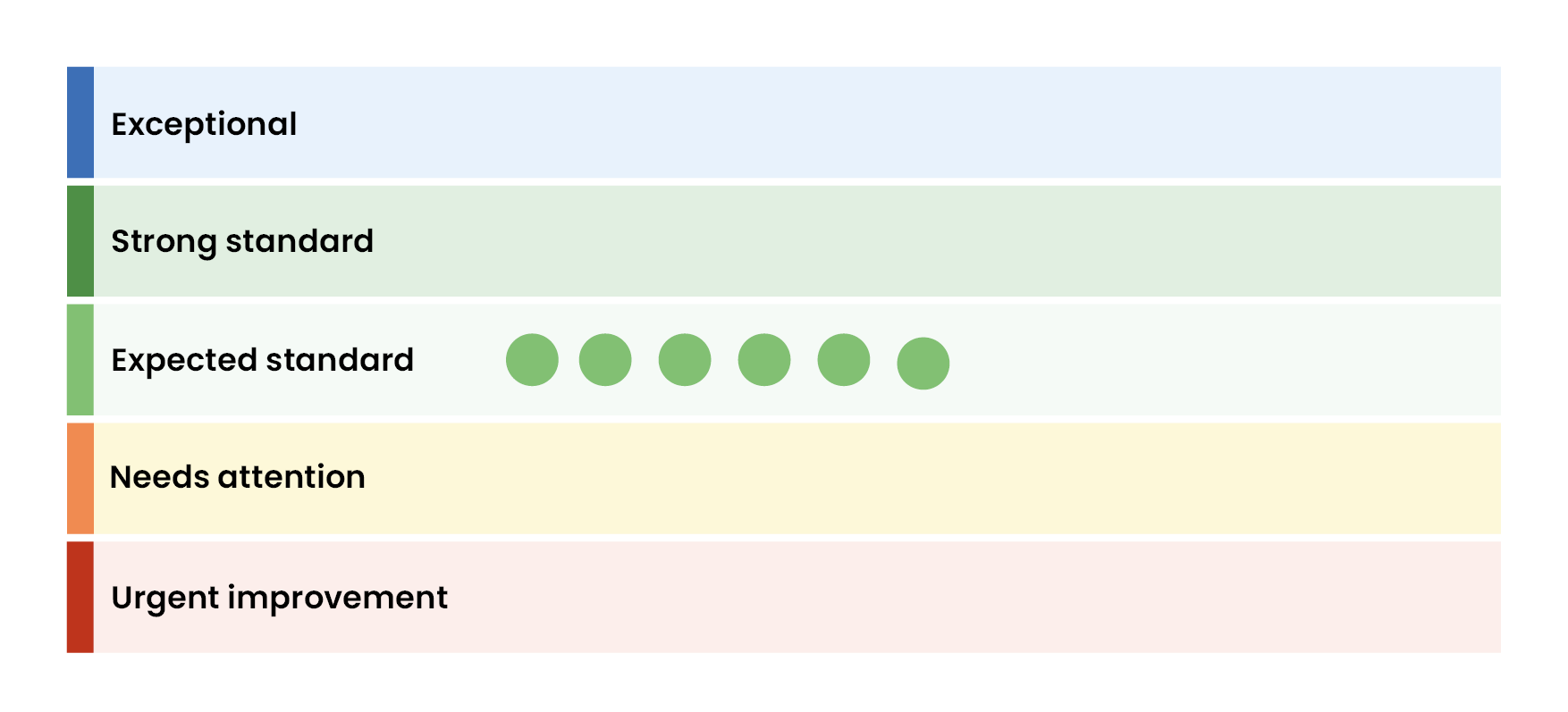
Grades explained
Exceptional
Practice is exceptional: of the highest standard nationally. Other schools can learn from it.
Strong standard
The school reaches a strong standard. Leaders are working above the standard expected of them.
Expected standard
The school is fulfilling the expected standard of education and/or care. This means they are following the standard set out in statutory and non‑statutory legislation and the professional standards expected of them.
Needs attention
The expected standards are not met but leaders are likely able to make the necessary improvements.
Urgent improvement
The school needs to make urgent improvements to provide the expected standard of education and/or care.
Safeguarding standards met
The safeguarding standards are met. This means that leaders and/or those responsible for governance and oversight fulfil their specific responsibilities and have established an open culture in which safeguarding is everyone's responsibility and concerns are actively identified, acted upon and managed. As a result, pupils are made safer and feel safe.
Expected standard
Achievement
The school’s motto of ‘inspiring excellence together’ underpins all that it does. Pupils typically develop the knowledge that they need in reading, writing and mathematics. Pupils with special educational needs and/or disabilities progress well from their starting points. They receive personalised support and are generally prepared for their next steps.
The school’s published outcomes in national tests and assessments at the end of key stage 2 in reading, writing and mathematics are in line with the national average. Phonics assessments in Year 1 and the Year 4 multiplication times tables check show that most pupils perform in line with other pupils nationally. For the most part, pupils build on their previous learning as they move through the school. For example, in history, pupils deepen their knowledge of local historical figures by using subject-specific language like ‘armada’ when learning about Sir Francis Drake.
Attendance and behaviour
Leaders set high expectations for pupils' attendance. Pupils arrive punctually at school to begin learning. Pupils across the school settle quickly into activities in classes. Leaders analyse attendance information closely. They identify any pupils who need extra support and address any high levels of absence sensitively. For example, leaders look carefully at each family’s circumstances when discussing attendance. They take appropriate action when attendance falls below expected levels. As a result, attendance has improved this year.
Staff set high expectations for behaviour, which pupils meet. Routines across the school are well established and effective in creating a calm environment. As pupils move through the school, they develop positive learning habits such as ‘team workers’, ‘reflective learners’ or ‘creative thinkers’. These ‘SECRET skills' help pupils take responsibility and support them to develop effective attitudes to their learning. Pupils are polite. They show great respect towards staff and one another. As a result, unkind behaviour is extremely rare. If incidents of poor behaviour occur, the school is quick to deal with them.
Curriculum and teaching
Leaders hold an accurate view of the quality of the curriculum and how it is taught. Careful thought has been given to the school’s context and the challenges of having mixed-age classes. The curriculum makes clear how pupils in the school build their knowledge and skills over time. A culture of reading runs through the school. Staff foster a love of stories among pupils. Pupils have regular opportunities to visit their school library and choose a book.
Staff have secure subject knowledge. They explain new content clearly to pupils. They use discussion and questioning to develop pupils' understanding of the concepts taught. Where necessary, staff adapt the curriculum to meet pupils' individual needs. For example, staff may introduce key vocabulary before a lesson or provide clear scaffolding to help pupils focus on the most important parts of a task. Pupils build their understanding gradually and securely. Staff provide opportunities for them to revisit what they know at the start of lessons. This supports pupils to retain and deepen their understanding well in reading, writing and mathematics. However, at times, the teaching of some aspects of writing, including spelling and handwriting, is not consistently effective. A few pupils lack fluency and accuracy when they write as a result.
Inclusion
Pupils with special educational needs and/or disabilities (SEND) learn the same curriculum as their peers. Leaders work closely with parents and carers to identify pupils’ needs and gaps in their learning quickly. Working with external agencies, the school provides guidance for staff about how best to support these pupils. Staff use this information to set clear, specific targets for pupils with SEND. They plan activities that help pupils work towards achieving these. Staff know pupils as individuals and use this insight to provide support that helps them achieve.
Staff receive effective training on how to adapt learning to meet the needs of pupils with additional needs. They use a range of helpful classroom strategies to remove barriers to learning. For example, visual prompts, sensory support and individual resources help pupils to work confidently towards their goals. Pupils benefit from these well-considered adaptations to teaching that help them succeed. Where appropriate, the school also uses alternative provision to meet pupils’ individual needs and secure positive outcomes.
Leadership and governance
The school is led with compassion and warmth. Leaders at all levels understand the school’s strengths and what needs to get better. Frequent collaboration with other schools in the trust helps the school continue to improve. Governors and trustees recognise the challenges. They assure themselves, for example through talking with staff and pupils, that leaders’ work to improve the school is making a positive difference for all pupils.
Leaders make decisions that place pupils’ best interests at the centre. For those who need additional support, including pupils with special educational needs and/or disabilities, the school works in partnership with external agencies to secure the help they need to thrive. Staff feel invested in and know that leaders care about their career progression and professional learning. Leaders ensure that staff at all levels engage in a well-designed training programme. This equips staff with the confidence and expertise they need to perform their roles effectively. Staff feel proud to work at the school and value the high levels of support for their workload and wellbeing. Parents and carers are overwhelmingly supportive of the education and care offered by the school. They appreciate the family feel and say that the school ‘brings out the best’ in their children.
Personal development and wellbeing
Pupils benefit from a well-designed personal development programme. The personal, social and health education curriculum is carefully planned and organised so pupils have the knowledge they need to keep happy and safe. It covers a range of topics including equality, physical and emotional wellbeing and how to stay safe. With support from the trust, the school helps pupils to explore ‘big life ideas’ like identity, community and living a good life.
Pupils learn and debate current affairs through weekly assemblies. They explore their Cornish heritage and traditions and celebrate St Piran’s Day and a local lantern parade in the nearby town. Pupils learn about a range of faiths through religious education. Visits to the local church and support from local clergy help pupils to explore their spiritual development. The school has started to increase diversity within the curriculum, for example through the ‘musicians of the month’ initiative. This introduces pupils to musicians from around the world. However, the school’s approaches to helping pupils to learn about different faiths and cultures are not as effective as they could be. At times, this affects some pupils’ understanding and sometimes leads to pupils having misconceptions.
For its size, the school offers a wide range of clubs, such as health and wellbeing, gardening or computer coding. These help to nurture pupils’ talents and interests. Staff track who takes part to ensure that no one misses out.
Pupils understand the fundamental British values. For example, they demonstrate a clear sense of justice and speak eloquently about the importance of individual liberty and the right to be respected. Initiatives such as ‘mini police’ support pupils’ understanding of how to keep safe in the local community and online. Pupils value the opportunities to explore and study in the well-developed outdoor learning area. This helps pupils connect with nature.
What it's like to be a pupil at this school
Pupils enjoy attending this small village school. They know that staff are there for them and help them when they need it. Pupils arrive brimming with enthusiasm for the day ahead. Staff greet them with a reassuring smile and welcome them into their classrooms. Pupils settle quickly. Consistent routines set the foundations for positive behaviours throughout the school day.
Generally, the school includes pupils with special educational needs and/or disabilities in all aspects of school life. Staff help to break down barriers to learning that pupils may have through well-designed adaptations. Pupils enjoy finding out new things in their classes and asking questions if they are unsure. From the start, they learn about how to work with others collaboratively, reinforcing the family feel of the school. Pupils typically achieve well. They are ready for the next stage in education.
The school creates a positive, respectful environment where pupils feel valued. This helps most pupils to attend regularly. Pupils sensibly follow the school rules. They know they are expected to be kind, respectful, try their hardest and listen well. This helps pupils to behave appropriately. Pupils benefit from warm, trusting relationships with staff, which helps them feel safe and cared for. They know they have trusted adults to speak to if they have any worries. As a result, bullying is very rare. If it does occur, staff deal with it swiftly.
The school prepares pupils well for life in modern Britain. For example, school council elections develop pupils’ understanding of democracy, while the eco club helps pupils to improve the local environment. All pupils take part in trips, which they enjoy. For example, pupils visit a museum in Plymouth or collaborate with another local school to watch a pantomime.
Next steps
- Leaders should ensure that the curriculum for writing, and how it is taught, supports pupils to develop their writing fluency and accuracy consistently well.
- Leaders should provide more opportunities for pupils to learn about diversity beyond their local community to deepen their cultural awareness.
About this inspection
This school is part of South East Cornwall Multi Academy Regional Trust, which means other people in the trust also have responsibility for running the school. The trust is run by the chief executive officer (CEO), Dan Buckley, and overseen by a board of trustees, chaired by Jamie Crisp.
Inspectors carried out this full inspection under section 5 of the Education Act 2005.
Following our renewed inspection framework, all inspections are now led by His Majesty’s Inspectors (HMIs) or by Ofsted Inspectors (OIs) who have previously served as HMIs.
Inspection activities:
Inspectors spoke with the executive headteacher, the head of school, the CEO, the trust's primary school improvement adviser and other school staff. The lead inspector met with trustees and the local governors.
The inspectors confirmed the following information about the school:
Changes to leadership have occurred in recent years. The current headteacher took up the role in January 2025.
The school runs pre-school provision that accepts children from the age of 3.
At the time of the inspection, there were fewer than 5 children on roll in the early years foundation stage phase. As such, the inspectors did not give a grade on the provision to avoid identifying individual children.
The school uses 1 registered and 1 unregistered alternative provision.
Head of school: Amanda Cummings
Further information and facts and figures used on inspection can be found below:
For previous reports visit: Ofsted | Trewidland Primary & Pre-School